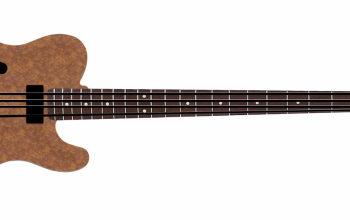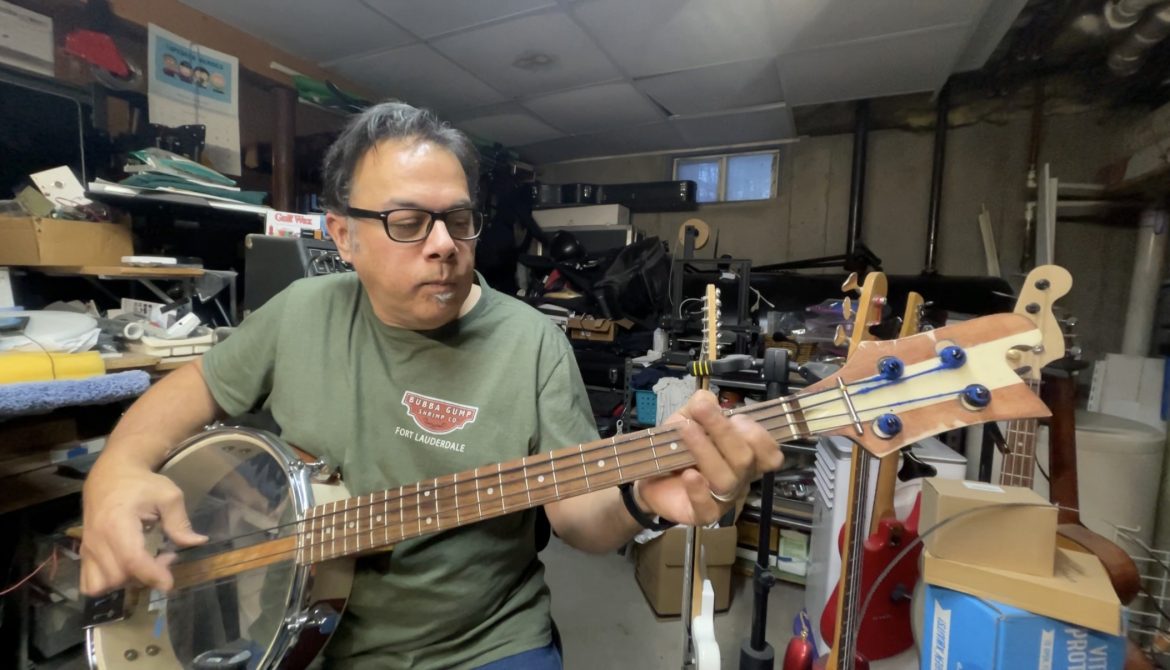
There’s been a fair bit of progress on strummin’ on the ol’ banjo…uh, bass. I did, in fact break the drum shell. I thought that was the end of it. Speaking to Sean, my technical (drum) advisor, he said I should try and glue it back together and use a dowel or 1×1 wooden rod to span the inside diameter of the drum to shore it up. Both of those suggestions worked!
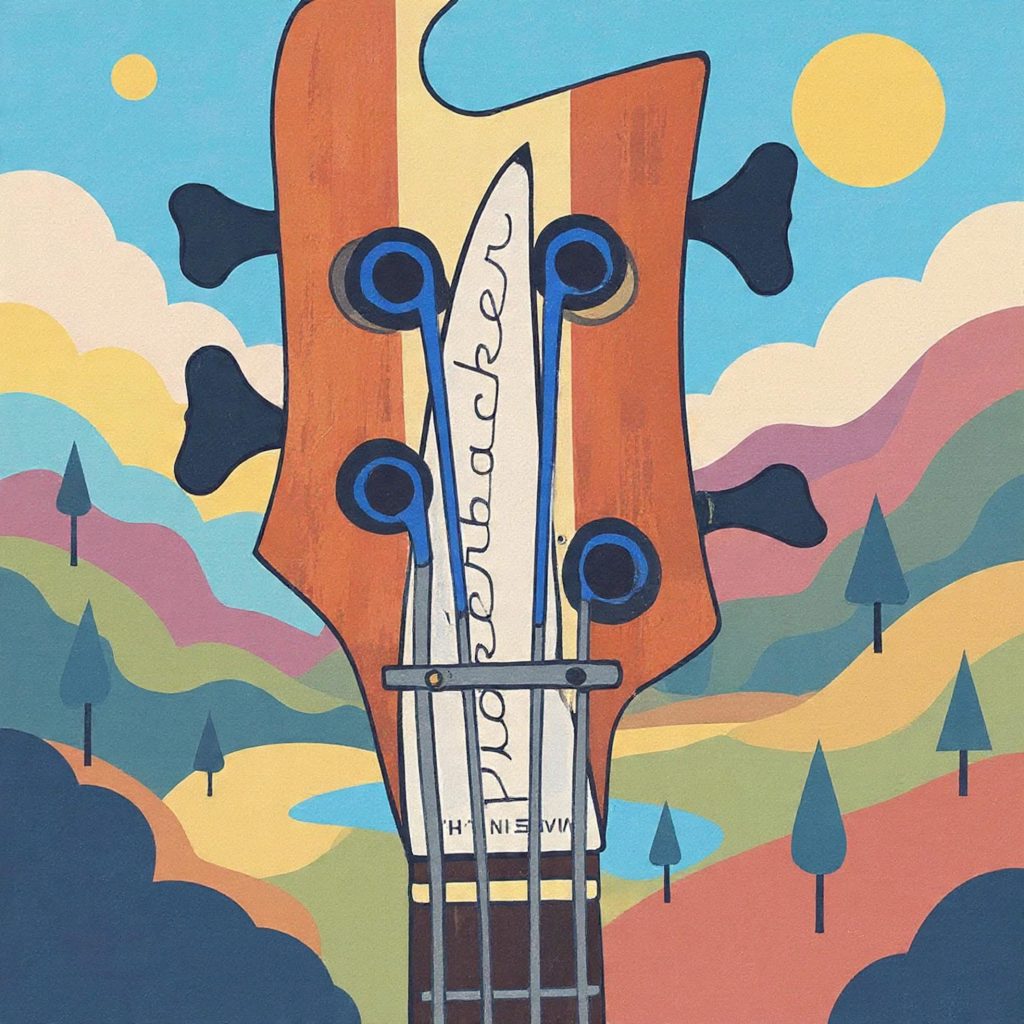
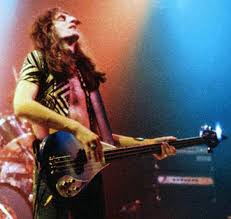
Also, the neck is different. Something about that other neck never sit right with me, it didn’t work in my Ric-inspired Bass VI I made either. So I had an unused Ric-inspired neck back when my Kay Ric faker bass was supposed to be a tribute to Chris Squire’s iconic 4001 bass–but that didn’t work out. Anyway, after the neck heel angle on the other neck didn’t work out and I was beyond frustrated with what was going on when I tried to adjust the neck angle with the threaded rod, I decided to do some research and take a look at how other banjos are put together. That’s where the wooden dowel/rod worked. With both anchor points of the neck into the drum and me trying to use the leverage of them to change the neck angle, that never worked because of physics and math.
There were three takeaways for me when it got down to it. I was focusing too much on the threaded rod mechanism, and didn’t take into account, the angle of the neck heel, the downforce on the strings at the tailpiece/bridge and the simplicity of attaching the neck to the body or drum in this case. My approach, like a lot of my approaches, was too bull in a china shop and needed to me more let’s take a step back. Remaking the tailpiece so it had the right amount of downforce on the bridge was something I was not giving enough attention to. My goal was to make it easy to restring and having some kind of figure 8 type hole so the string’s ball end would get anchored in was the main design feature, when it should have been how the strings exit the tailpiece and go over the bridge.
Lots more work to do:
- Reshape the neck heel, fill cracks and wood anomalies, patch headstock holes & divots
- Re-vinyl wrap the body, maybe the headstock–that involves total disassembly
- Replace some of the hardware, screws, bolts, nuts
- Neck fretboard work: level, crown, polish, rejuvenation of the fretboard wood, file back fret sprout
- Add metal bushings to wood dowel
- Make a better truss rod cover that’s not just paper