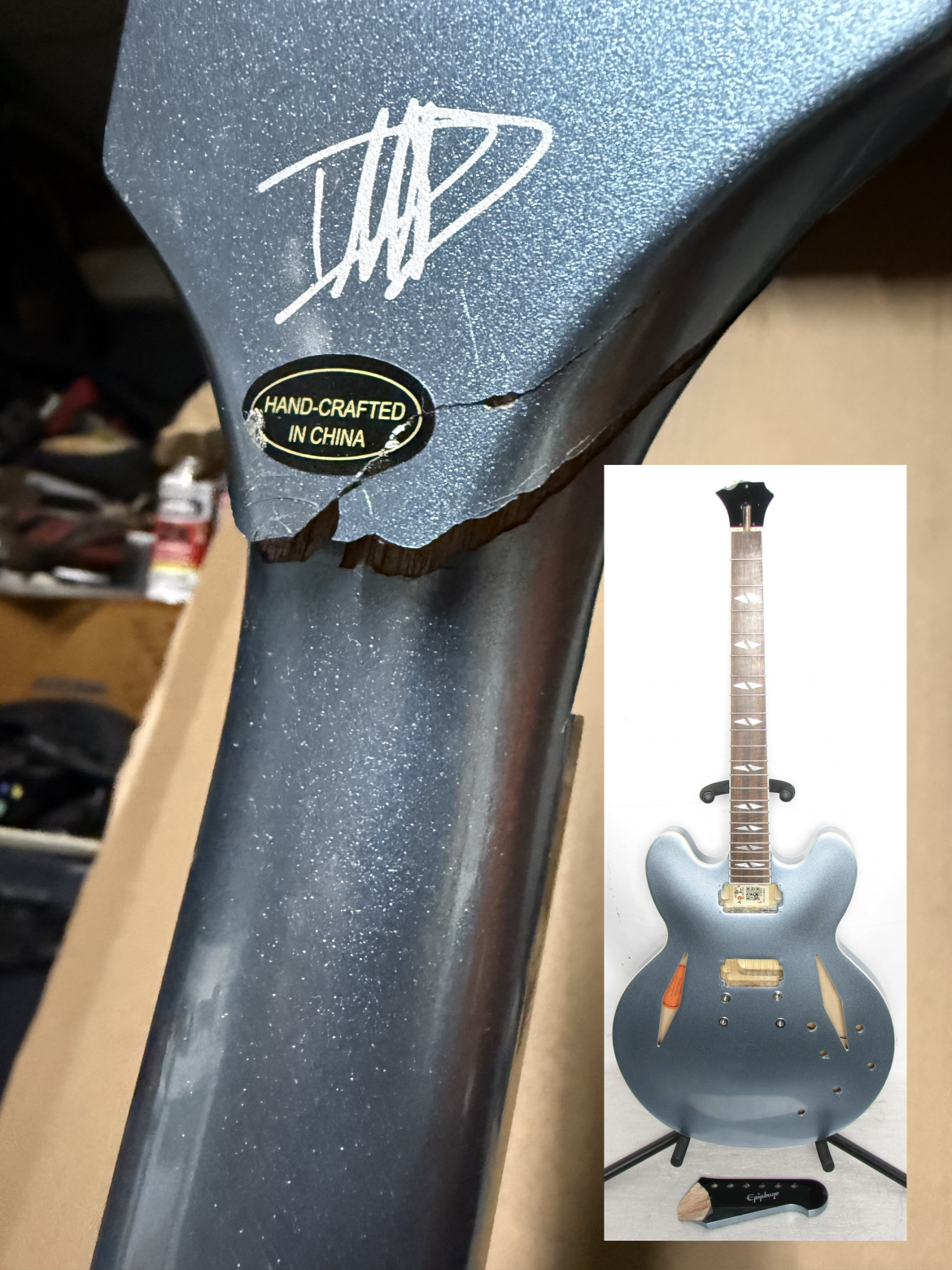
Yeah, I bought it like that.
I’ve been of fan of Dave Grohl’s since I first heard Foo Fighters long ago. He’s very inspiring as a musician, so when I saw this Epiphone model of his signature model guitar on eBay and the bid was less than $200 (and that included a branded hardshell case), I bid–and won. I know new and used ones fetch big bucks–but the Gibson models? Fuhgeddaboudit!
This break is the worst kind, complete. Completely broken off headstock. It’s a Gibson tradition I hear. This isn’t my first neck break, so to speak. The first was the Brown Special, Brian May signature-ish guitar. That one was not as bad, but this will take all of my current knowledge and YouTube-inspired skill to pull off.
Here’s a link to another page that goes into detail about mounting the headless bridge.
Option 1: First things first, I’ll need to get that piece of the headstock glued back in place. Next, I’ll need to stiffen that part of the neck up a bit, so to speak, as it were. That’s the part that I haven’t done before, so I’m going to have to build a rig for cutting channels where the headstock meets the neck and reinforce it with some mahogany, which I have left over from my friend Tom’s Akira Takasaki tribute build. After those channels are filled with the mahogany splines, I’ll need to sand those down and make them disappear. Or so that’s what people typically do.
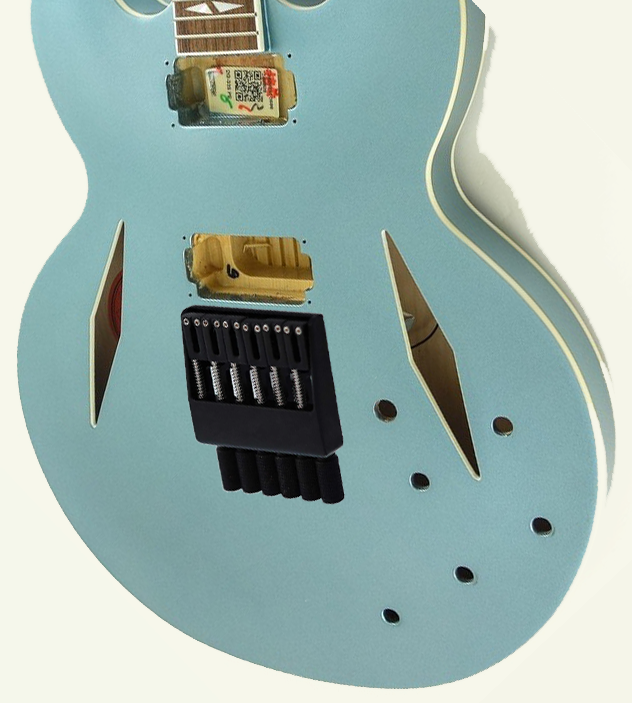
Option 2 is to go headless, using Guyker’s WT001 6-String Headless guitar and BridgeTailpiece Lock, which would be a really cool project! That would save me from attaching the headstock and I’d have to mount the headless bridge to the existing mounting points already on the body. My thinking is I’ll make some kind of sled that the bridge will mount to, then mount that sled to the mounting points of the guitar’s bridge and tailpiece. I will also need to cut off the remaining part of the headstock and add the tailpiece lock that comes with Guyker’s headless bridge kit.
Since paint and finishing isn’t really my thing, I figured I’d use an old Japanese tradition called Kintsugi which honors the breakage (usually in pottery) and that break is embellished with gold usually. I thought that might be a nice way to do this since my finishing/painting skills are not going to make this repair invisible. So my plan is to get those splines in after I glue up the headstock and dig a little surface channel, put some gold material–probably glitter and epoxy in the channel, sand it flat, clear coat it and Bob’s your uncle. Wish me luck!
-Terry, December 19, 2025